What Colorado Lost to Term Limits
Colorado has lost hundreds of years of legislative experience to its misguided term limit amendment.


In 1990, Colorado and Oklahoma became the first states in the country to implement legislative term limits. Other states soon followed. In Colorado, this has meant that members of the lower chamber cannot serve more than four consecutive terms and members of the upper chamber cannot serve more than two consecutive terms. The first set of incumbents that faced these term limits was in 1998.
A note on the data used in this post
This post relies on the good work of the Colorado Legislative Council Staff who have created and maintained a comprehensive historical database of Colorado state legislators going back to the state's founding (and before). The staff graciously shared the underlying data with me, and you can browse the database here.
The impact of term limits on legislative experience
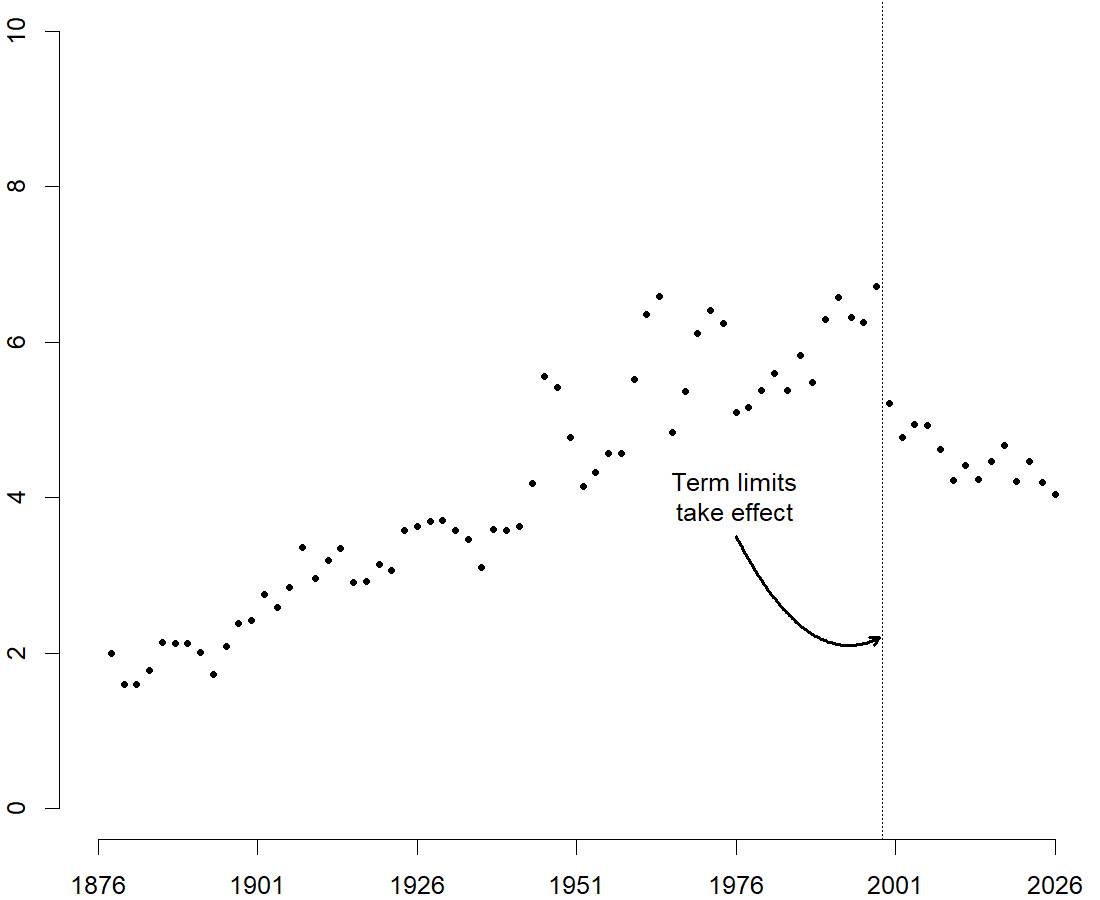
The graphic below shows the average years of previous legislative experience among legislators in each session beginning in 1878 (in the inaugural session, none of the legislators had any prior experience beyond the territorial government). In general, previous experience increased steadily over the state's history from about two years in the early part of the state's history to a high of about seven years of previous experience as the term limits took effect.
Beginning in 2000, the average number of years of experience has been declining on average year over year. In 2026, the average legislator had only four previous years of experience in the legislature. In total, this means that there are likely 300 fewer cumulative years of experience in the Colorado legislature than we might expect had trends continued as they were prior to the imposition of term limits.
Average years of previous legislative experience among legislators, 1878-2026
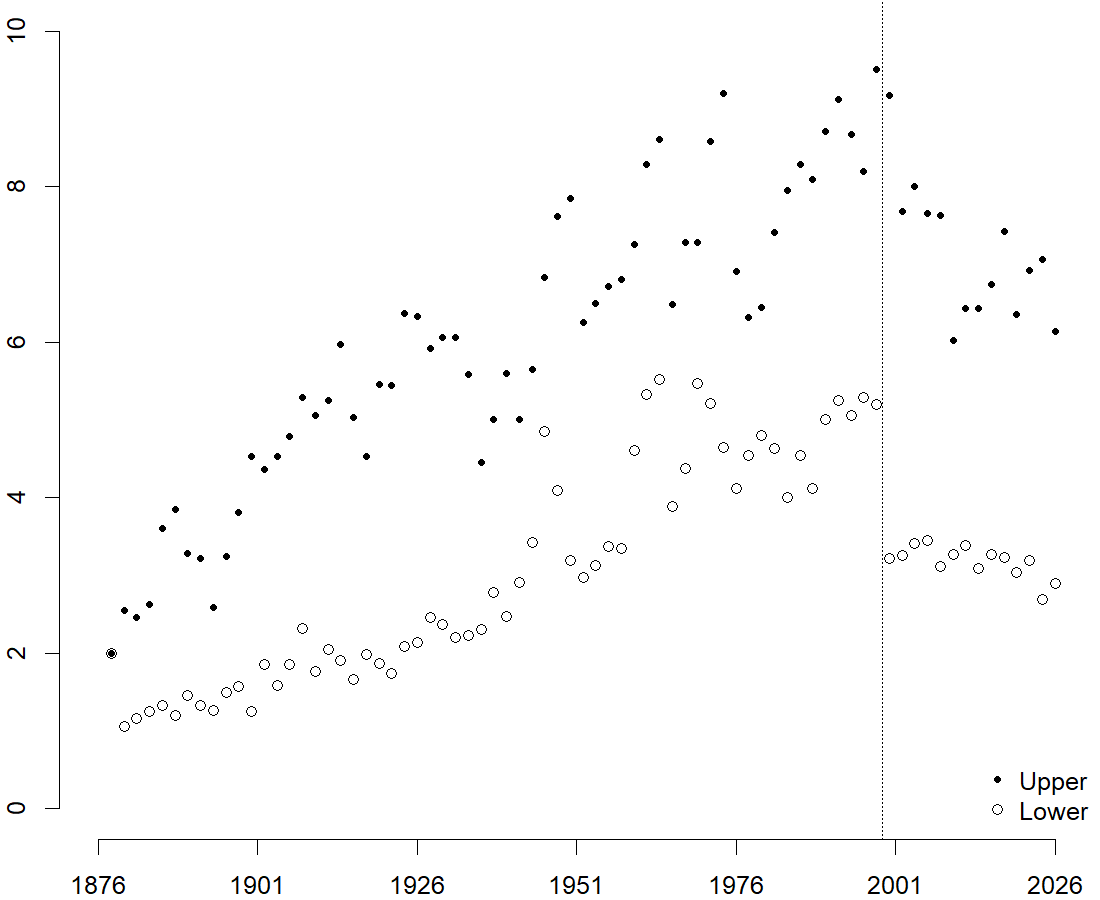
Legislators serving in the Colorado state senate have consistently had more previous experience compared to those serving in the state house. In terms of overall years of experience, the drop-off in both chambers has been similar in magnitude, but the fall from five years of previous experience to only two in the house is likely more significant as new legislators learn a lot in their first few years of service.
Average years of experience among legislators by chamber, 1876-2026
Legislator characteristics before and after term limits
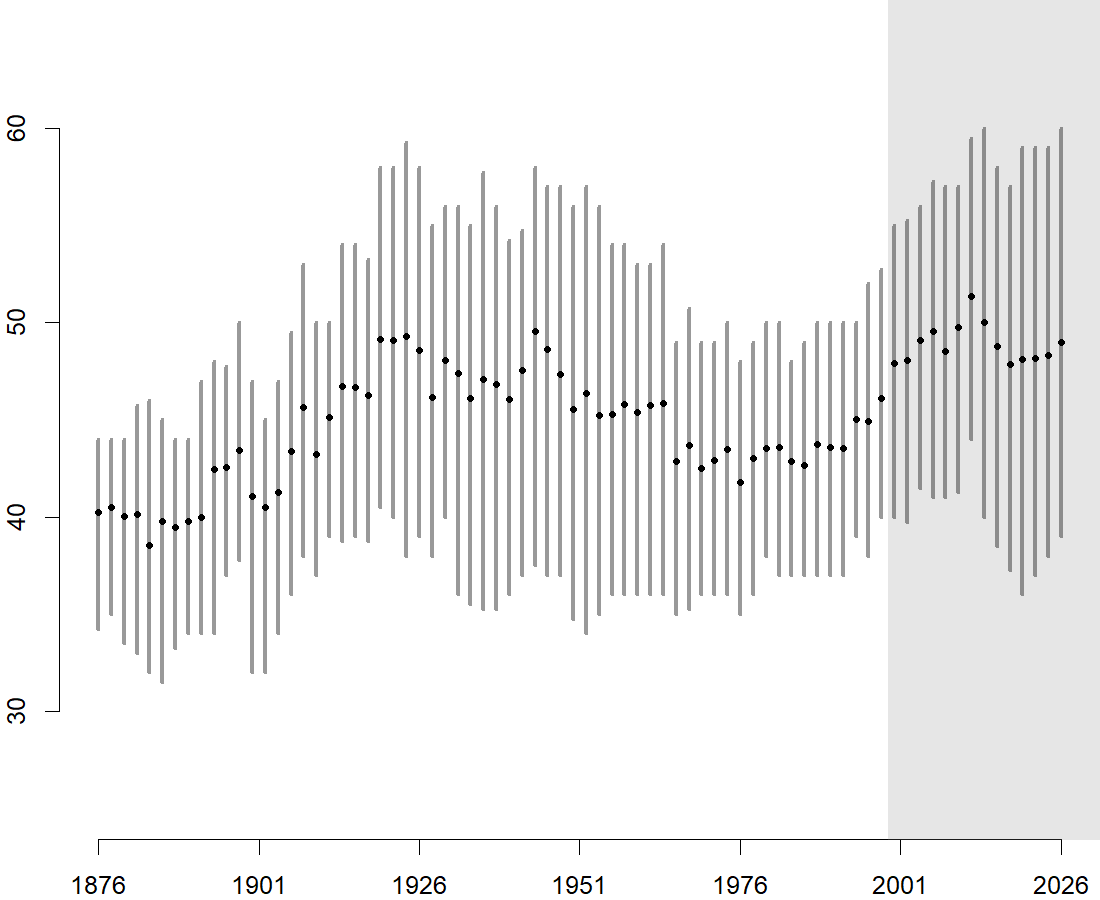
One of the arguments made by proponents of term limits was that they might lead to an infusion of fresh blood into Colorado politics. The story here is a little mixed. The average age at which Colorado legislators were first elected continued to rise even after the term limits came into effect. In the last few years, the average age dropped somewhat (though it is still higher than it was in the decades before the term limits came into effect).
The graphic below shows the average age and the middle 50 percent of the distribution of the ages when legislators serving in each year were first elected. Ages at first election were declining somewhat between the 1910s through the 1980s. The average age at first election seems to have started to climb after the passage of the term limit referendum in 1990.
Distribution of ages at first election among Colorado legislators, 1876-2026
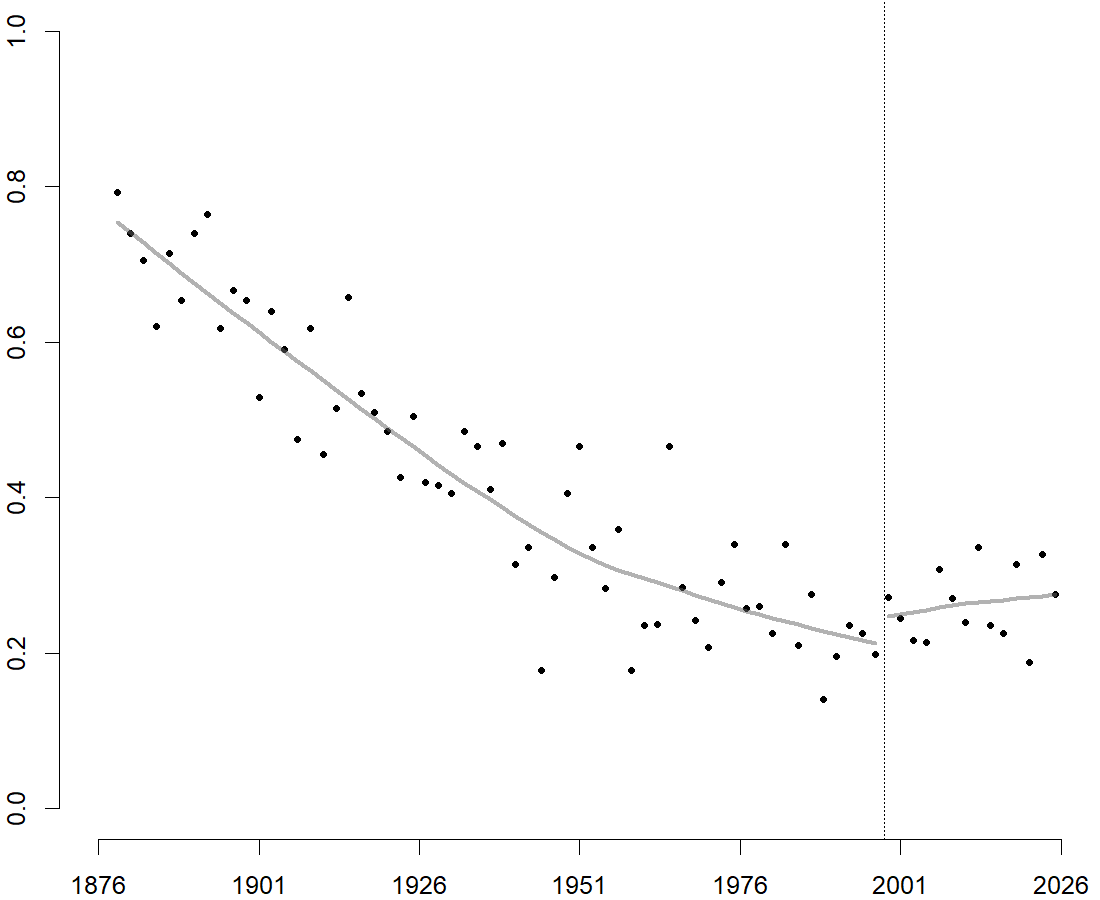
The graphic below shows the overall share of legislators serving in each session that had no previous legislative experience. That share had been steadily declining prior to the time when term limits were implemented. Since term limits have been in effect, the overall share of legislators with no previous legislative experience stopped declining, but it has not increased dramatically.
Share of legislators with no previous legislative experience
Some concluding thoughts
Term limits have likely cost Colorado hundreds of years of cumulative experience in the legislature. Relationships and tenure are key elements of legislative performance, and by creating more churn within the legislature, term limits undermine the ability of lawmakers to do their jobs.
Political scientists almost universally believe term limits are a bad idea for legislatures. The loss of institutional memory weakens the effectiveness of legislatures and shifts power to executives and bureaucracies. Legislators in states with term limits have been shown to rely more upon lobbyists and other interest groups compared with those in states without term limitations.
A quarter century after term limits started being applied to Colorado politicians in the legislature, the only thing we have to show for it is a weaker legislative branch that is less capable of meeting the complex challenges that the state faces.