Understanding Kiros's victory in CO-01
A few relevant data points about Kiros's victory in CO-01.

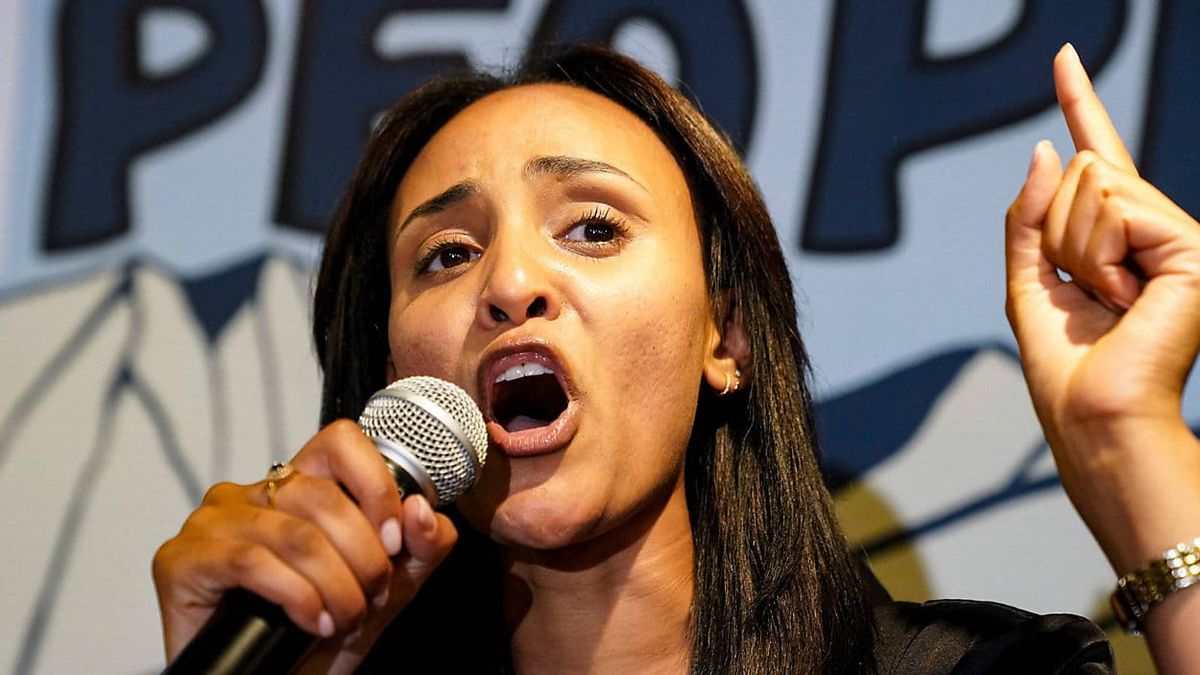
Melat Kiros and her campaign won a hard-fought victory against 30-year incumbent Diana DeGette in Tuesday's primaries. Her campaign was significantly outspent, but through a combination of organizing and a general anti-incumbent environment, Kiros won her race by a nearly 20 point margin.
In this post, I'll break down some of the preliminary data in an attempt to understand this stunning turn of events in Colorado's capital city.
Age and socioeconomic status
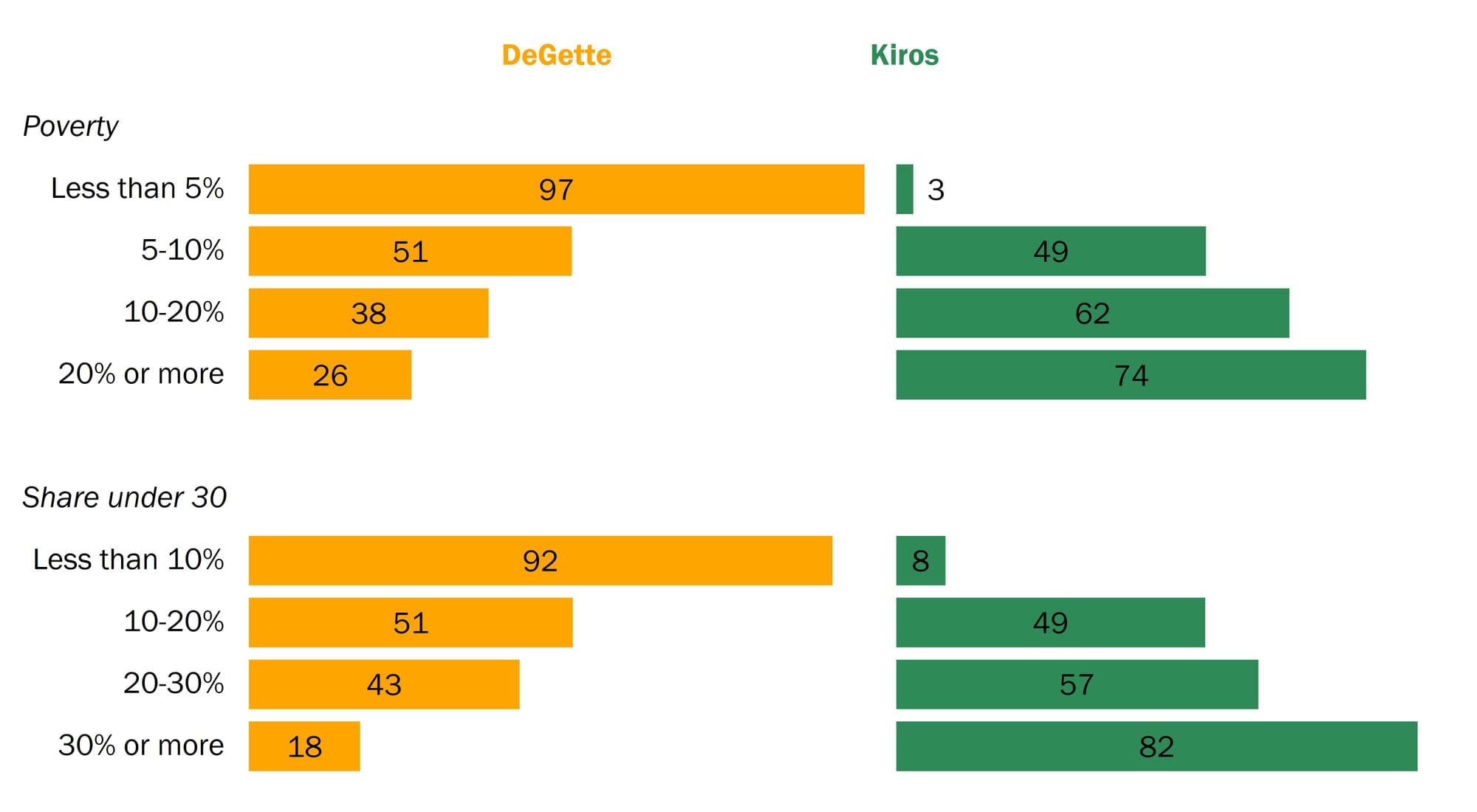
The graphic below shows the relationship between the sociodemographic factors associated with the vote in the first district. DeGette performed best in places within the district that had the lowest levels of poverty. DeGette won an overwhelming share of the precincts that fall in the areas of the district where less than 5% of the population falls below the poverty line. By contrast, Kiros performed much better in the more economically strained parts of the city.
Almost everyone who comments on this race notes that Kiros was not even born when DeGette first took office, and a huge part of Kiros's victory is due to thousands of volunteers doing canvassing and phone banking throughout the district. In areas of the district with the fewest residents under 30, DeGette held a commanding lead. Kiros's strength was concentrated in areas with the greatest shares of young people.
Share of Denver neighborhoods with the following characteristics won by each candidate ...
Education and racial makeup
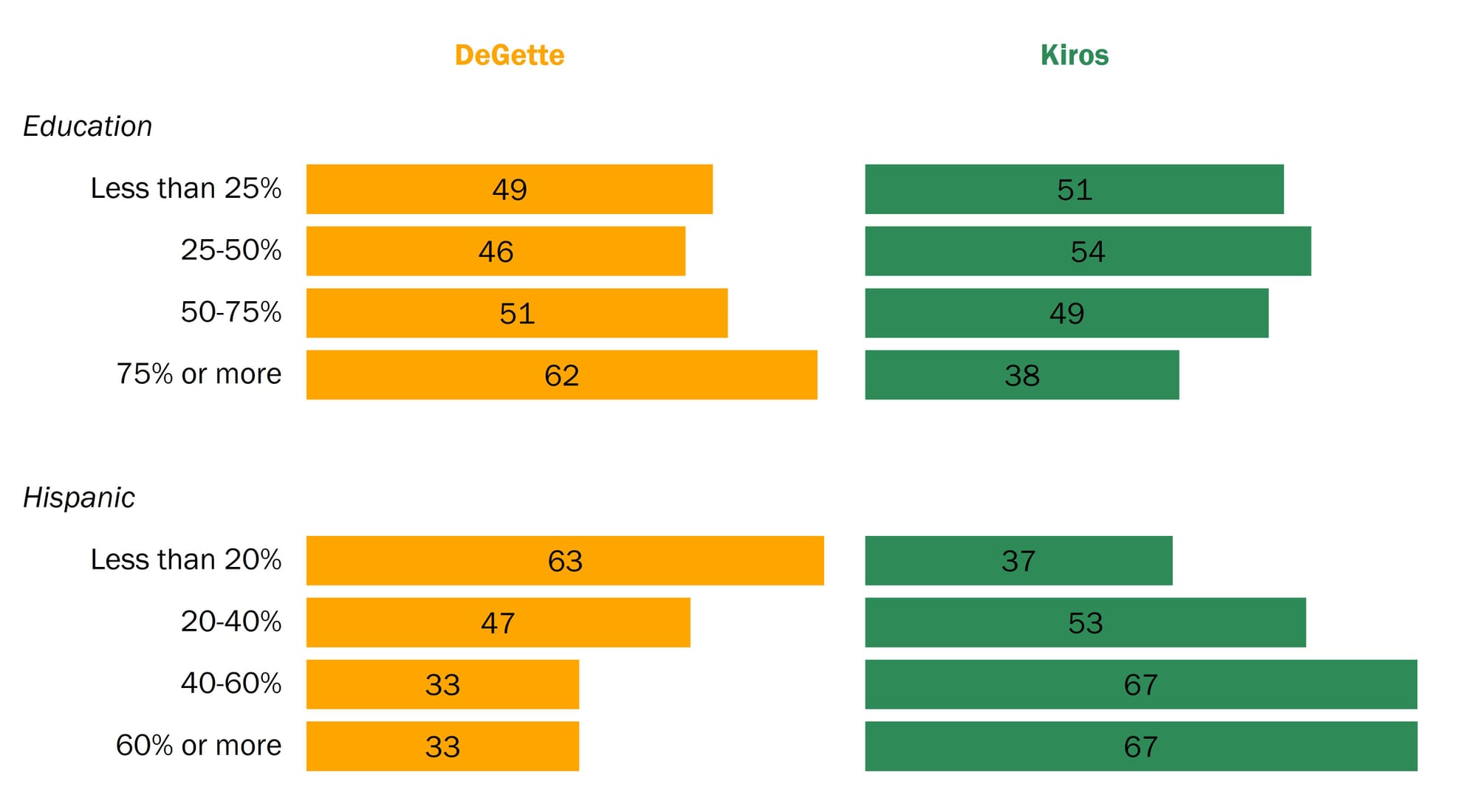
DeGette performed somewhat better than Kiros in the parts of the district with the highest levels of educational attainment, but educational attainment seems to be more modestly related to the election outcome than other factors.
The first district is home to a growing share of Hispanic Coloradans. DeGette performed best in the parts of the district with the fewest Hispanic residents. In parts of the district with 40% or more Hispanic residents, Kiros won about two-thirds of the precincts.
Share of Denver neighborhoods with the following characteristics won by each candidate ...
A note about the data used in this post
It can be hard to find good election data in a timely way. For this post, I relied on the returns that are reported from the Denver County election administration dashboard. Unfortunately, try as I might, I could not find any way to get at the data that underlies the maps produced on their website. To extract the data, I used some image processing to convert the map image to a set of pixels that can be overlaid on Census tract maps from the U.S. Census Bureau. There are a few limitations to this approach. The election website most clearly shows the geographic distributions of the winners in each precinct. Without some further insight as to how they have translated the colors in the map to the specific margins within each precinct, I've relied on looking at the winner of each precinct and aggregated those winners to the tract level.


