Colorado partisanship in context
Colorado has trended toward the Democratic Party even as the rest of the country is moving in the other direction. This post puts Colorado into the national context.

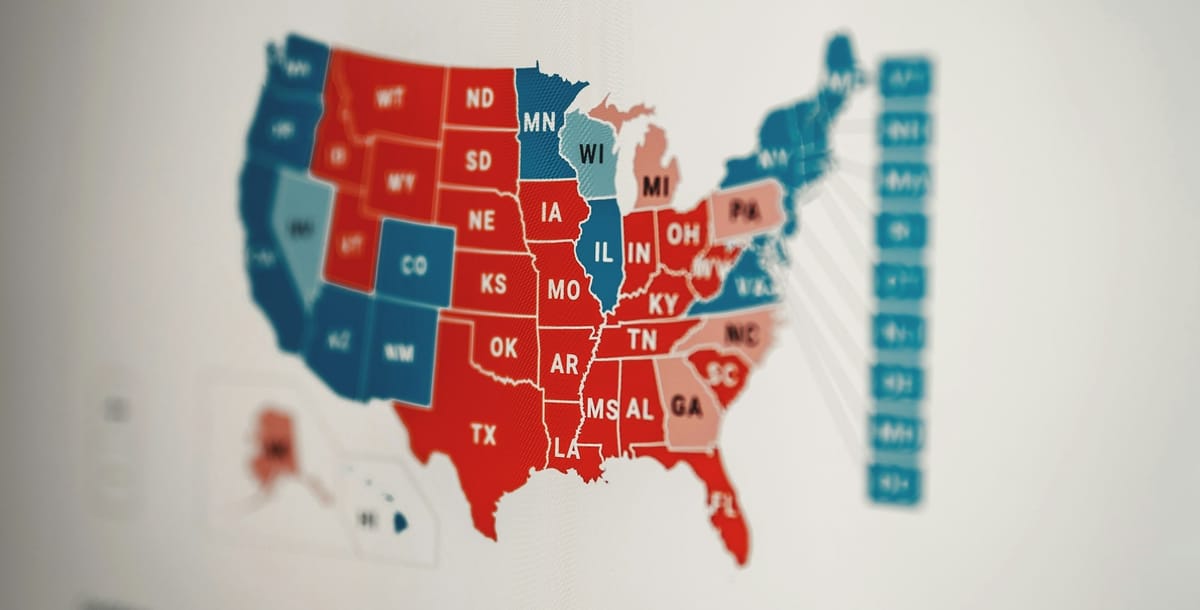
Over the last few weeks at my day job, I've been working on a report commemorating the 20th anniversary of the Cooperative Election Study. The report is now out (you can read it here), and it documents how the Democratic advantage in partisanship among the general public – which has characterized national politics for as long as people have been rigorously measuring it – is now almost entirely gone.
This stands, as we have seen, in stark contradistinction with the trend toward the Democratic affiliation among the general public in Colorado. In this post, I'll draw out a few notable comparisons between the political environment in Colorado and what we are seeing at the national level.
The graphic below comes from the report and compares the Democratic advantage (the share of the public that identifies or leans toward the Democratic Party minus the share of the public that identifies or leans toward the Republican Party) estimates for the past 20 years of the CES and similar estimates from the American National Election Study (the longest running academic study of political attitudes and behaviors).
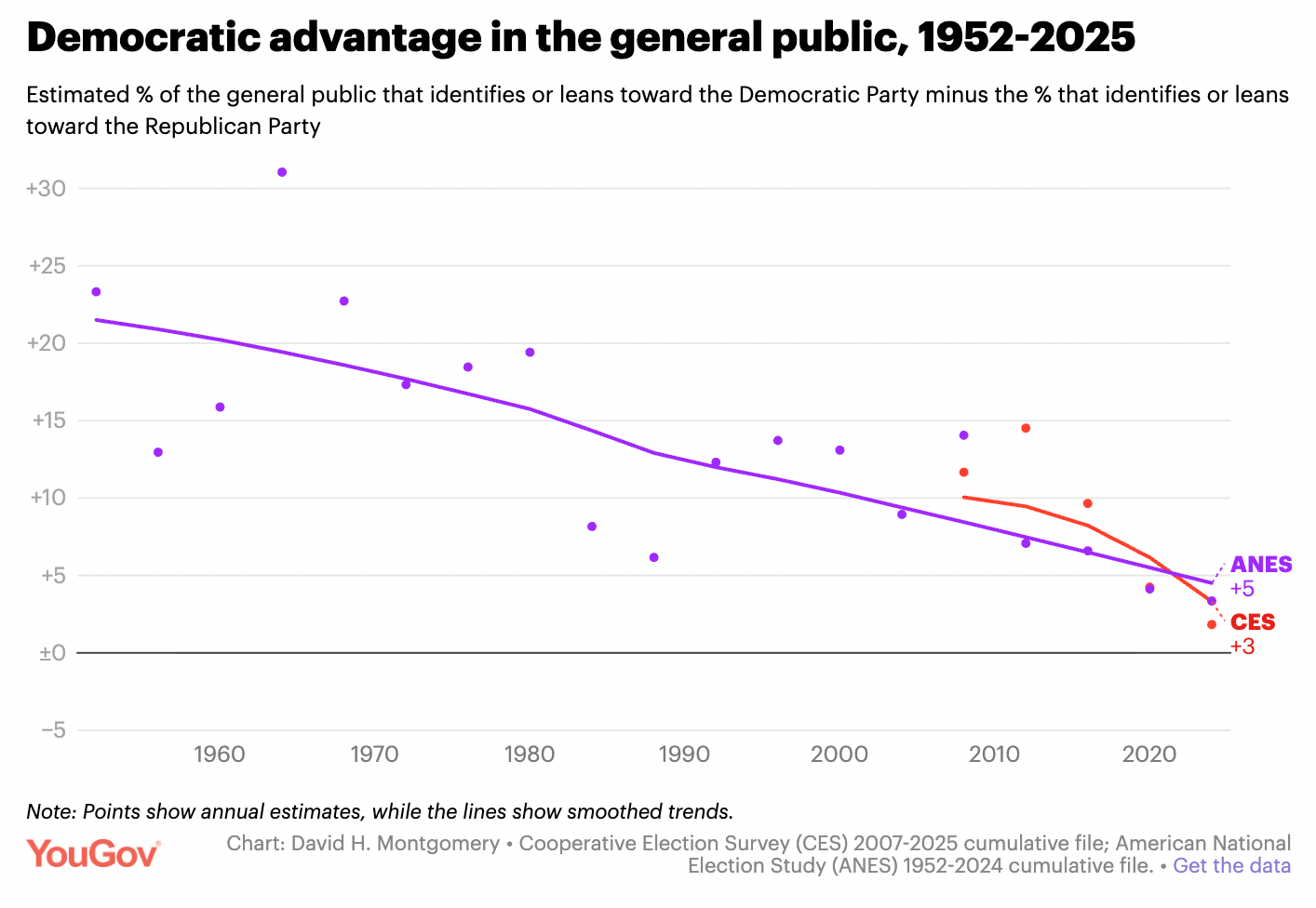
The movement away from the Democratic Party has been a steady decline on average since the advent of scientific polling. The CES data captures the tail end of this slide, but the trend long predates it. The graphic below compares the national CES estimate of the Democratic advantage with the estimate in Colorado.
Democratic advantage in party affiliation among the general population ...
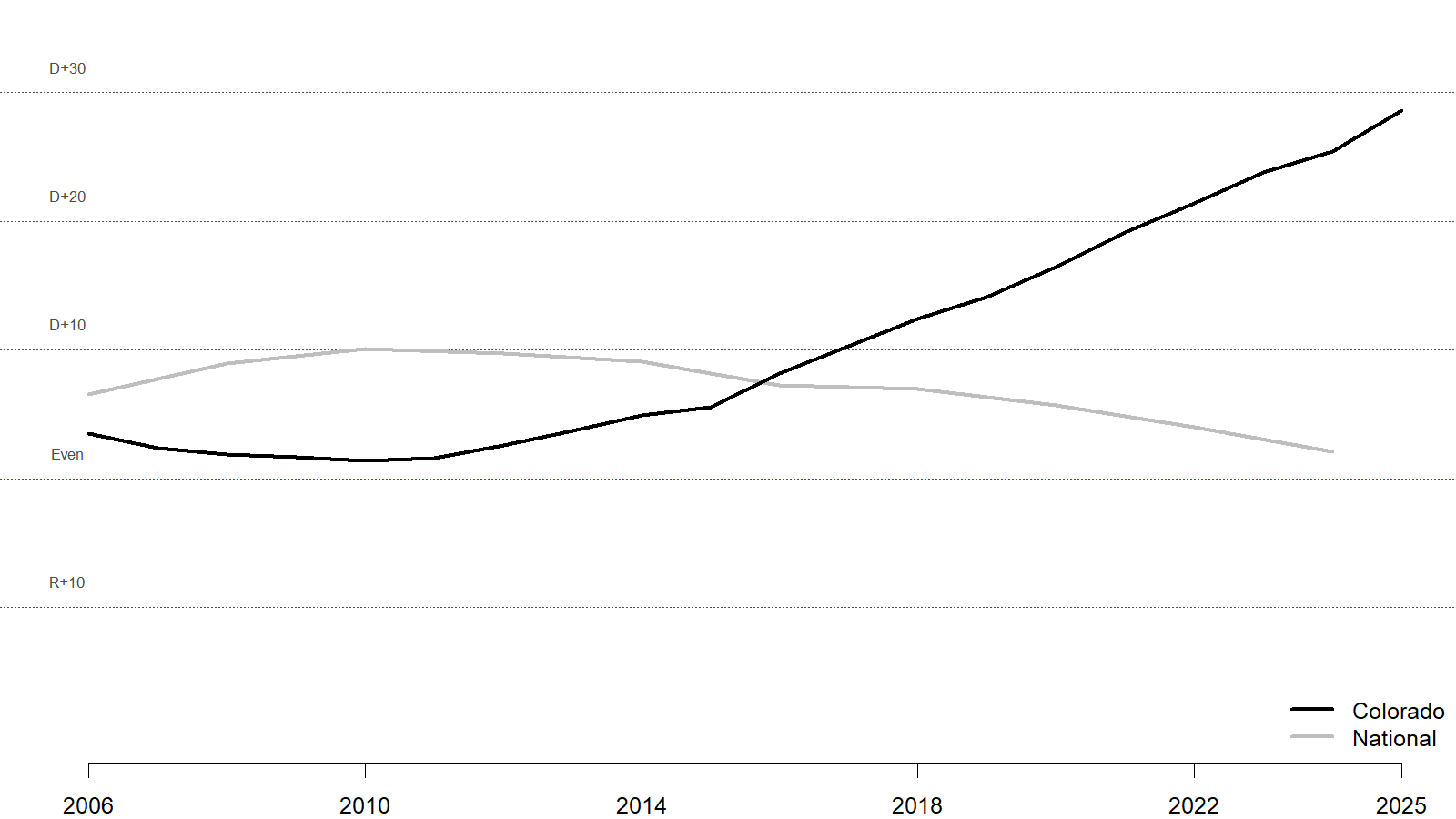
Colorado has bucked the national trend. Two decades ago, the general public in Colorado was about evenly divided between the Democratic and Republican Parties. The trend in Colorado has moved steadily in the Democratic direction even as the national trend has been moving in the opposite direction. Today, Democrats have a roughly 30-point advantage among the general public in Colorado.
Part of the explanation for the difference in Colorado is the higher-than-average levels of educational attainment within the state. In the national report, I highlighted only one major demographic group that had become more Democratic in its partisan affinity over the past 20 years: White men with college degrees.
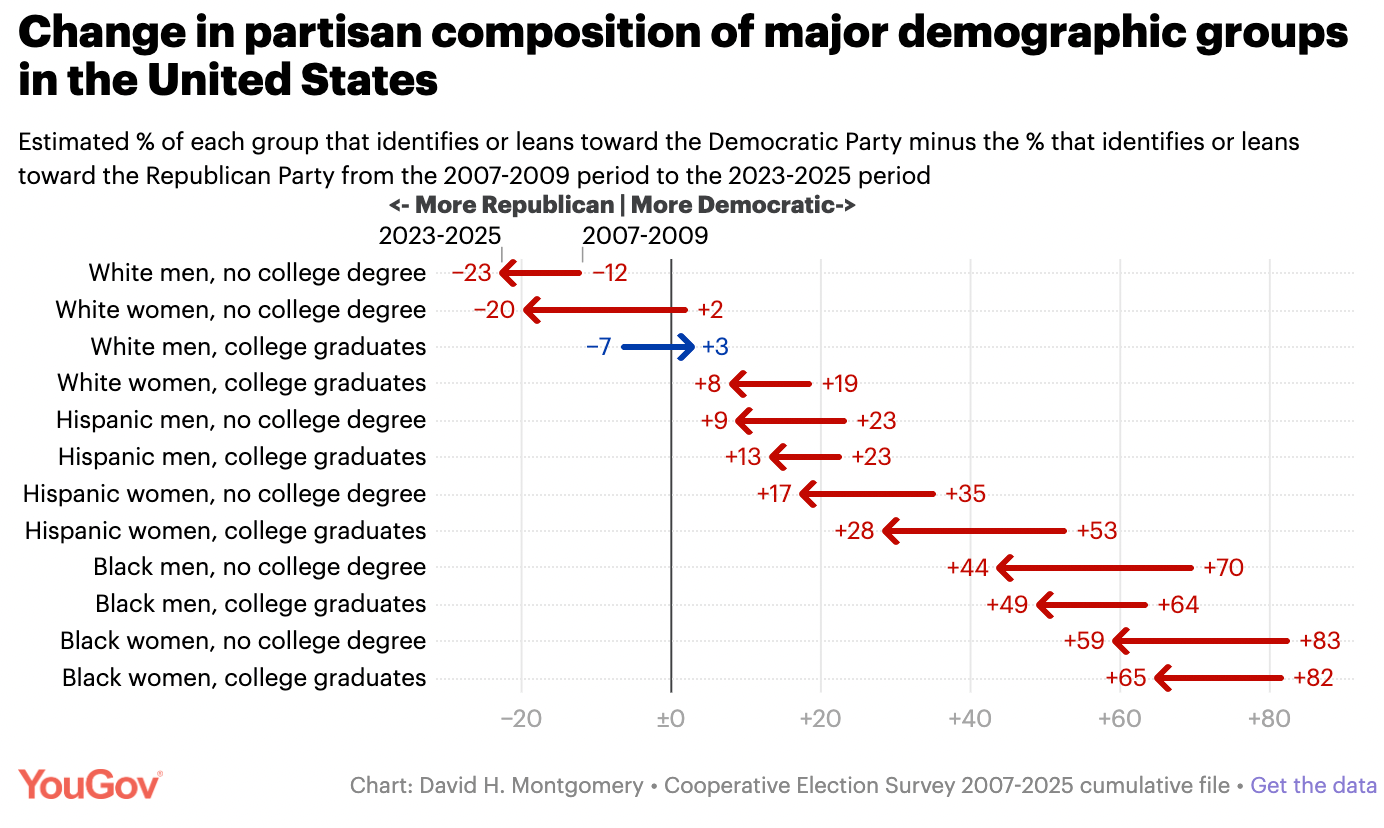
Colorado has a significantly higher share of White men with college degrees than does the rest of the country. Nationally, this group accounts for under 10% of the adult population. In Colorado, the share of White men with college degrees is about double the national average.
Concluding thoughts
Colorado is trending Democratic at a moment when the rest of the country is moving in the other direction. Part of this difference is due to demographic differences between Colorado and the rest of the country, but that is not enough to explain the dramatic difference that we see in partisan trajectories.
There is a lot more in the full report. Check it out: Two Decades of Partisanship in the Cooperative Election Study.