The invisible primary in Colorado: Republican governor


In my last post, I analyzed the patterns of campaign contributions to the leading Democratic candidates for governor in Colorado. This time, we'll look at the Republicans. For more on the invisible primary, see the discussion in that post.
The 2026 Republican candidates
The frontrunners for the Republican nomination in Colorado are Victor Marx (a self-described "high risk humanitarian" who centers his personal story and faith on his campaign website) and state senator Barbara Kirkmeyer who has represented the 23rd district since 2021 (Kirkmeyer highlights her legislative successes and fiscal conservatism on her campaign website).
There are many other candidates running for the Republican nomination. I have focused on these two because they are the only to raise significant funds to this point and receive endorsements from prominent state-wide and national figures.
As of the January 2026 filing deadline. Marx had raised significantly more campaign funds compared to Kirkmeyer. Marx's campaign reported raising about $620,000 as of January 15, and Kirkmeyer's campaign about $380,000. The vast majority of this money has come from individual donors. The TRACER database includes records of 5,616 contributions from 4,649 individual donors to these two candidates. Marx has received over 85% of these contributions. The average (itemized) Kirkmeyer donor has given about $500 to her campaign, while the average Marx donor has given about $150.
It is notable how much less money has been raised in this race in comparison to the amounts raised on the Democratic side (Democratic candidates have raised eight times more money so far in their primary from more than four times as many donors).
Kirkmeyer's donors are substantially more likely than Marx's to be Colorado residents. Nearly 30% of Marx donors list an address outside of Colorado compared to only 5% of Kirkmeyer donors.
Marx's donors have been drawn largely from individuals who have previously not contributed to other Colorado candidates. This is true even when we look at only those donors who list a Colorado address. Perhaps unsurprisingly given her history in the legislature, Kirkmeyer's support comes, in significant part, from individuals who have been involved with Colorado Republicans in the past. The plot below shows the share of each candidate's donors who have contributed to candidates in Colorado running for either statewide or federal office. The width of each bar is proportional to the total number of donors that have given to each candidate.
Share of donors to each candidate who have previously contributed to a Colorado candidate
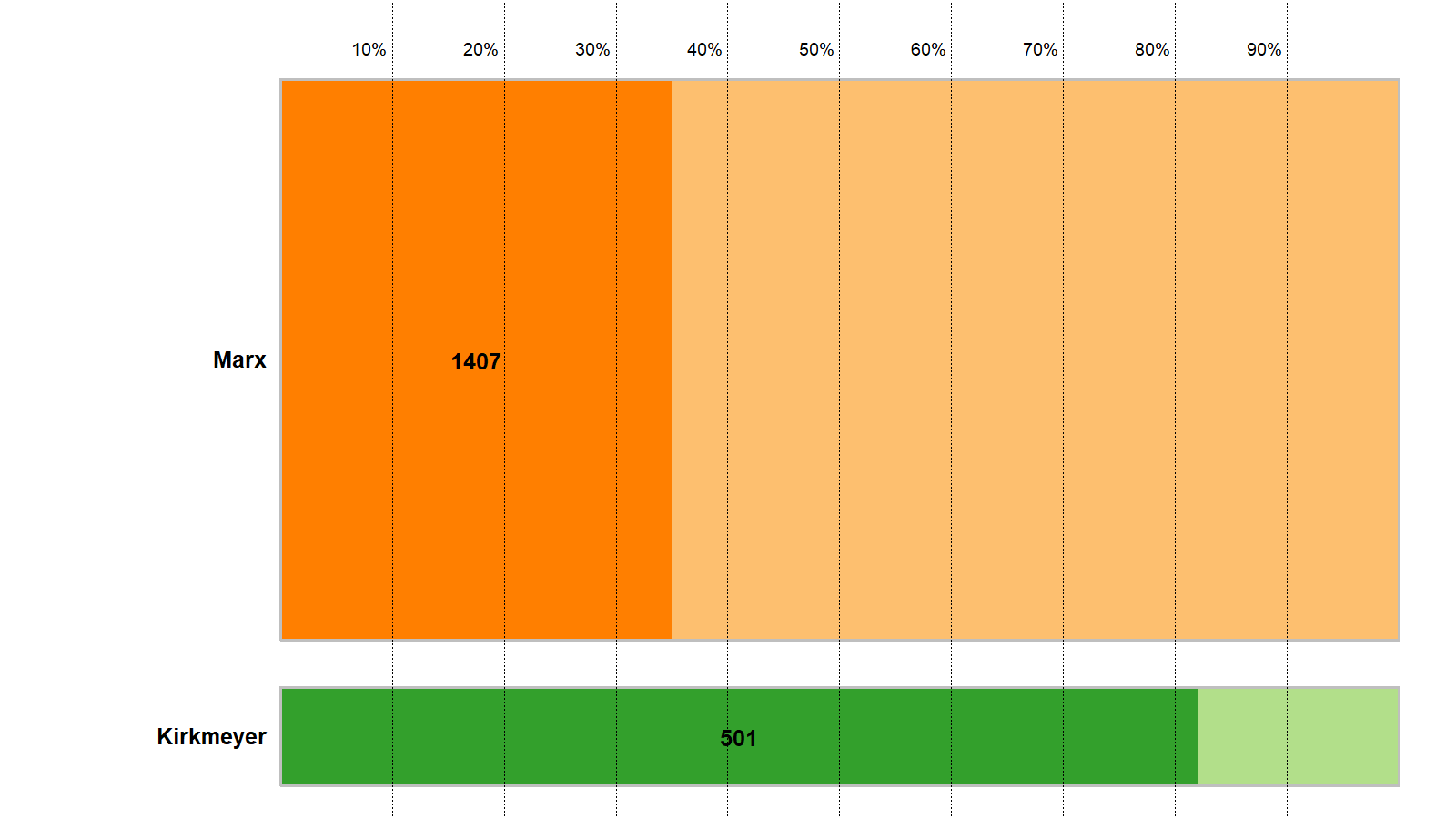
Despite Kirkmeyer receiving a much greater share of her donors from individuals who have contributed to candidates in the past compared with Marx (82% compared to 35%), the fact that Marx has so many more donors overall means that he has a much larger number of these donors than does Kirkmeyer.
One of the only sets of donors where Kirkmeyer has a relative as well as an absolute advantage is with past donors to her previous campaigns. Kirkmeyer served for many years as a Weld County commissioner and currently is in the state senate. She also made an unsuccessful run for the newly created 8th district in 2022. Overall, about a third of Kirkmeyer's current donors have contributed to one of her other campaigns since 2017. Marx has only received contributions from 23 of these past Kirkmeyer donors (much less than 1% of his donors).
Trump donors
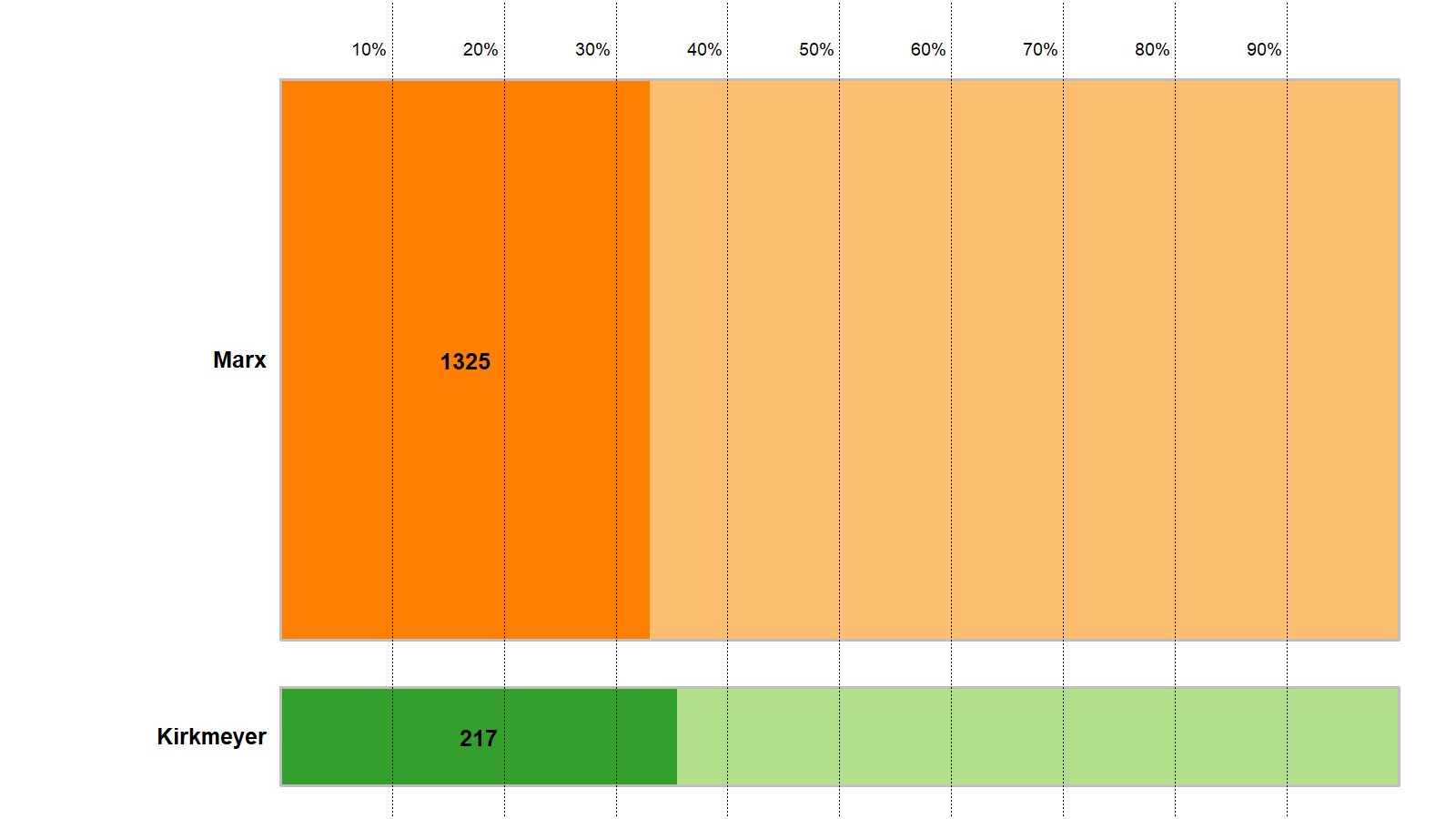
Both candidates have a roughly equal share of donors who have previously given to Trump's campaigns. A third of Marx's donors have given to Trump since 2017. Among Kirkmeyer donors, 36% have previously given to Trump. Since Marx has many more donors than Kirkmeyer, that 36% represents 1,325 individuals compared to Kirkmeyer's 217. The figure below shows the share of each candidate's donors who have previously given to Trump. The width of each bar is proportional to the total number of donors that have given to each candidate.
Share of donors to each candidate who have previously contributed to Trump
Concluding thoughts
Most political analysts believe that it is unlikely that any Republican candidate will be competitive for the governor race in Colorado in 2026. The relatively quiet nature of the fundraising on the Republican side reflects this. The race may reveal something about the dynamics of the Colorado Republican Party (which seems to be in a certain amount of disarray). To the extent that such labels can apply any longer, Kirkmeyer seems to be positioned as the relatively "moderate" or "establishment" candidate, but at least at this early point in the race, she has failed to attract the support of significant shares of Republican donors.
Among the high-profile endorsers in the race, Gabe Evans (the current occupant of Colorado's most narrowly divided congressional district – district eight) has endorsed Kirkmeyer while Lauren Boebert (the representative of the most solidly Republican district in the state – district four) has endorsed Marx. Kirkmeyer has struggled to this point to win over significant shares of Evans donors relative to her opponent (only 106 of her donors have donated to Evans compared to 97 who have given to Marx).
Things can certainly change between now and the primary election in June, but they will have to change dramatically for Kirkmeyer to have a realistic shot at the nomination.