
The partisan gender gap in Colorado
The gender gap in partisan affiliation has shrunk somewhat over the past 20 years. Women remain more likely than men to identify or lean toward the Democratic Party than men.
The gender gap in partisan affiliation has shrunk somewhat over the past 20 years. Women remain more likely than men to identify or lean toward the Democratic Party than men.

Partisanship and political outcomes in the U.S. have become increasingly linked to levels of educational attainment. This post unpacks the diploma divide within Colorado using individual-level survey data.
Over the past 20 years, Democrats have gained a substantial advantage among the general public in Colorado. This is in stark contrast to the way Democratic identification has been trending in the rest of the country. Two decades ago, the share of Coloradans who identified or leaned toward the Republican

Voting is the most fundamental form of political activity in the United States, and Colorado has consistently ranked among the highest turnout states in the country. Colorado also has a more accessible system than the average state. Since the move to all-mail voting in 2013, Colorado regularly ranks among the

In the last pair of posts, I’ve looked at the donor coalitions of the Democratic and Republican candidates for the 2026 gubernatorial race in Colorado. Of course, there are more races in 2026 than just the contest at the top of the ballot. In this post, I'll

In my last post, I analyzed the patterns of campaign contributions to the leading Democratic candidates for governor in Colorado. This time, we'll look at the Republicans. For more on the invisible primary, see the discussion in that post. The 2026 Republican candidates The frontrunners for the Republican

The first votes to decide the nominations in the 2026 gubernatorial election in Colorado won’t be cast for nearly five months, but the likely candidates have been busy for months already securing endorsements and campaign donations for their races for the governor’s mansion. This is sometimes called the
There has been a great deal of digital ink spilled over the past few decades about political polarization. Often these pieces take the form of a detached observer wringing their hands over the state of politics in the country and wishing for a return to an (often imaginary) day when
The urban/rural divide in American politics has roots that extend back to the founding of the country. From the first history courses students take in the U.S., we learn about the different interests of the more agrarian regions of the country and the more urban parts and how

I've published a set of fact sheets for congressional districts in Colorado. They are formatted similarly to facilitate comparison. My aim is to provide some high-level context about the demographic and socioeconomic characteristics of different parts of the state as well as how they have changed over time.
Most of the population of the seventh district lives in the western parts of the Denver metro area. The district also includes many smaller central mountain towns. The district has been represented by Brittany Pettersen since 2023. Demographics Population growth, 1990-2022 The population of the seventh district has grown at
Colorado’s fourth district makes up most of the eastern part of the state. This area is dominated by agriculture and oil extraction. The biggest cities within the district are Highlands Ranch, Parker and Loveland in the western part of the district. The district has been represented by Lauren Boebert
CO-06
Colorado’s sixth district is south and east of Denver. The district contains Aurora, Littleton and Centennial. The district has been represented by Jason Crow since 2019. Demographics Population growth, 1990-2022 The population of the sixth district has grown at a somewhat slower pace compared with the rest of the
CO-05
Colorado’s fifth district is primarily composed of Colorado Springs and surrounding communities south of Denver. In many ways, this district closely mirrors the demographic trends of the rest of the state. The district has been represented by Jeff Crank since 2025. Demographics Population growth, 1990-2022 The population of the
CO-02
Colorado’s second district is located in the northern part of the state and borders Wyoming on its northernmost end. The college towns of Fort Collins and Boulder fall within the second district. The district has been represented by Joe Neguse since 2019. Demographics Population growth, 1990-2022 Since 1990, Colorado&
CO-03
Colorado’s third district makes up most of the western and southern parts of the state. A large share of the land area of the third district is composed of mountainous regions. The largest cities in the district are Grand Junction and Pueblo. The district has been represented by Jeff
colorado politics
Colorado’s first district includes much of the Denver metro area. It is more diverse than the rest of the state, and substantially more Democratic in its voting behavior. The district is currently represented by Dianna DeGette who has served since 1997. Demographics Population growth, 1990-2022 Since 1990, Colorado'
CO-08
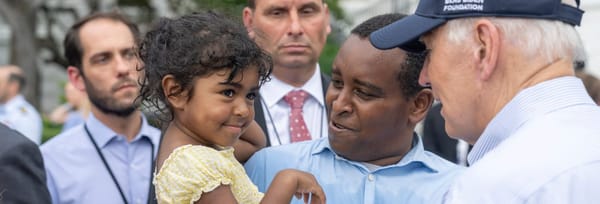
Colorado’s eighth district is located in the north central part of the state. It includes many front range communities and the northernmost part of the Denver metro area. The district was created newly as a result of reapportionment following the 2020 Census, and it is currently represented by Gabe
politics
In my last post, I looked at the ways in which politics in the United States has come to be oriented around education. This post will take a related approach to look at race and ethnicity within Colorado. Unlike the strong relationship between aggregate levels of education and votes for
politics
This post walks through one of the most significant changes in American politics over the past 50 years: the reorientation of politics across educational lines. I trace how this trend has evolved nationally and within Colorado.
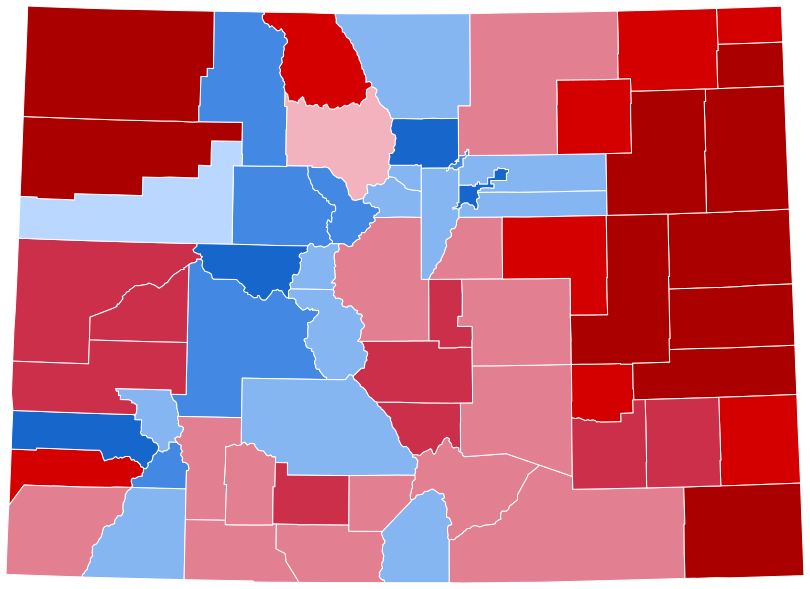
Colorado is one of the only states in the country that has moved in a steadily Democratic direction over the past 25 years. The graphic below shows how the two-party vote (that is excluding minor party candidates) in Colorado compares with the national two-party vote. Since the 2008 election, Colorado
Welcome to my Colorado politics site. My plans are to update this site regularly with original analyses and visualizations of demographic and social trends that have some bearing on Colorado's political landscape. I was raised in Colorado from a very young age (my parents moved me here when